Exterior detailing
Exterior Car Detailing in Charlotte
A wash that removes contamination rather than grinding it into the clear coat, followed by a protection step chosen for how you actually store and drive the vehicle.
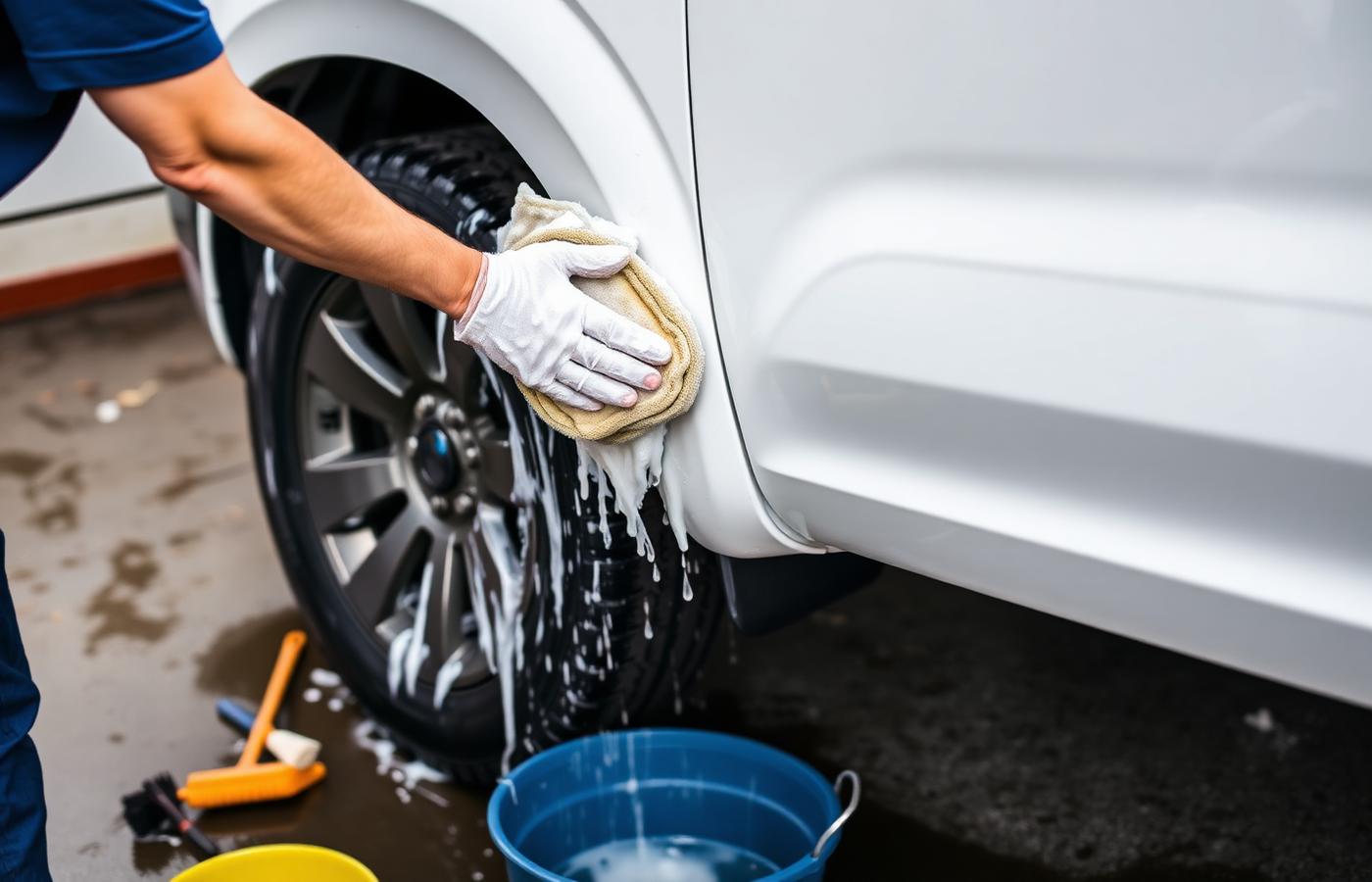
Why wash technique decides paint condition
Most swirl marks on Charlotte daily drivers were not caused by a single dramatic event. They were installed gradually — automatic brush washes, dry-wiping pollen, one dirty towel used across an entire car.
A safe wash minimizes contact and controls grit. Wheels first with separate tools, a thorough pre-rinse, a foam layer to soften and lift, then a single-direction contact wash with fresh media and a grit-guarded rinse bucket. Drying with filtered air and a plush towel, not a chamois dragged across a dusty panel.
Decontamination: the step most washes skip
After washing, a paint surface can still feel gritty. That texture is bonded contamination — brake dust particles, industrial fallout, rail dust, tree sap mist and road tar that a soap wash cannot remove.
Chemical decontamination dissolves iron particles; clay treatment mechanically shears off what remains. Skipping this step before applying protection seals contamination under the product, and any wax, sealant or coating applied to a contaminated surface bonds poorly and fails early.
Choosing a protection step
Read the comparison in detail on ceramic coating vs wax. None of these prevent rock chips, and none make a vehicle scratch-proof.
| Protection | Typical durability | Best for |
|---|---|---|
| Carnauba wax | 4–8 weeks | Show finish and warmth on dark paint; garage-kept vehicles |
| Paint sealant | 4–6 months | Daily drivers wanting real seasonal protection with modest cost |
| Ceramic coating | 1–5 years | Owners who wash regularly and want easier cleaning long term |
Not sure which service the vehicle actually needs? Describe it and we'll tell you honestly. Call (980) 441-5881 or request a quote.
Wheels, tires, trim and glass
- Wheel faces, barrels where reachable, and lug areas cleaned with pH-appropriate chemistry
- Tires cleaned to remove old dressing and browning, then dressed to a satin rather than wet-look finish
- Exterior plastic trim cleaned and treated; faded trim can be restored to a degree but heavily UV-damaged trim has limits
- Glass cleaned inside the seals and, on request, treated with a hydrophobic coating that noticeably improves wet-weather visibility
Local factors worth planning around
In pollen season, exterior appointments are most useful once the heaviest fall has passed, followed by regular maintenance washes. Protecting the paint beforehand still helps: pollen releases far more easily from a sealed or coated surface.
Under mature Charlotte tree cover, sap and droppings are the more urgent problem. Both etch clear coat within hours on a hot panel. If you park under trees daily, a durable protection layer and prompt spot removal do more for your paint than any single detail.
Frequently asked questions
Related pages
Paint Decontamination in Charlotte
Washing removes what sits on the paint. Decontamination removes what has bonded to it — the embedded particles that make clean paint still feel rough.
Read morePaint Correction in Charlotte
Polishing that removes defects instead of hiding them. Correction levels a microscopically thin layer of clear coat so light reflects cleanly again.
Read moreCeramic Coating in Charlotte
A durable, semi-permanent layer that bonds to properly prepared clear coat, making the surface slicker, glossier and easier to keep clean through Carolina pollen, heat and rain.
Read moreMobile Car Wash in Charlotte
A proper hand wash brought to your parking space. Faster and cheaper than a detail, and dramatically safer for your paint than a brush tunnel.
Read moreBook mobile detailing in Charlotte
Tell us the vehicle, its condition and where it will be parked. We'll confirm what the vehicle actually needs and what it will cost before any work starts.