Paint correction
Paint Correction in Charlotte
Polishing that removes defects instead of hiding them. Correction levels a microscopically thin layer of clear coat so light reflects cleanly again.
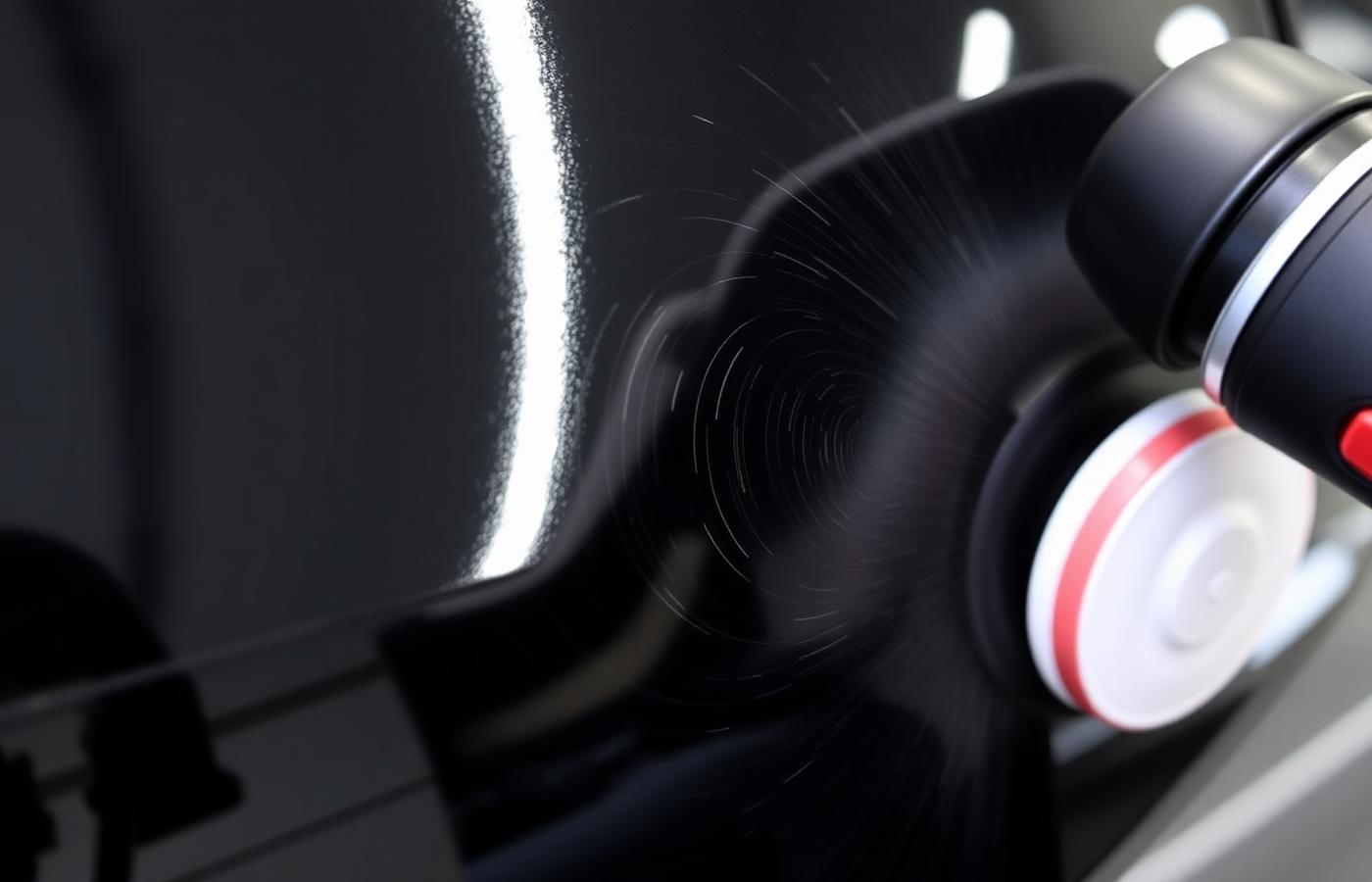
What paint correction actually is
Modern automotive paint is built in layers: primer, a colored base coat, and a transparent clear coat on top that carries the gloss and the UV protection. Almost everything you notice as "bad paint" on a vehicle that has not been damaged in a collision is not in the color at all — it lives in that clear layer as microscopic scratches, etching and dullness.
Paint correction is the controlled machine polishing of that clear coat. A polisher, a pad and an abrasive polish level the surface a few microns at a time until the surrounding clear is flush with the bottom of the defect. Once the surface is level again, light reflects in one direction instead of scattering, which is why corrected paint looks deeper, darker and wetter without anything having been added to it.
That is the key distinction between correction and a glaze, filler or heavy wax. Filling a swirl hides it until the product wears off. Correction removes it. If a product is doing the work, the defect comes back in a few washes; if polishing did the work, the defect is gone until something new marks the paint.
What correction can and cannot remove
The depth of a defect decides the outcome, not the effort put into it. Correction can normally level:
- Swirl marks and wash-induced marring — the fine circular scratches from brushes, dirty mitts and dry-wiping
- Holograms — the straight, shimmering buffer trails left by aggressive or poorly finished rotary work
- Light scratches that your fingernail does not catch in
- Water spot etching, where minerals have bitten a ring into the clear coat
- Oxidation and chalky dullness on sun-exposed or single-stage finishes
- Early bird-dropping and sap etching that has not gone through the clear
- Sanding marks and dullness left behind by previous refinish or body work, where the panel has enough material to work with
Where correction has limits
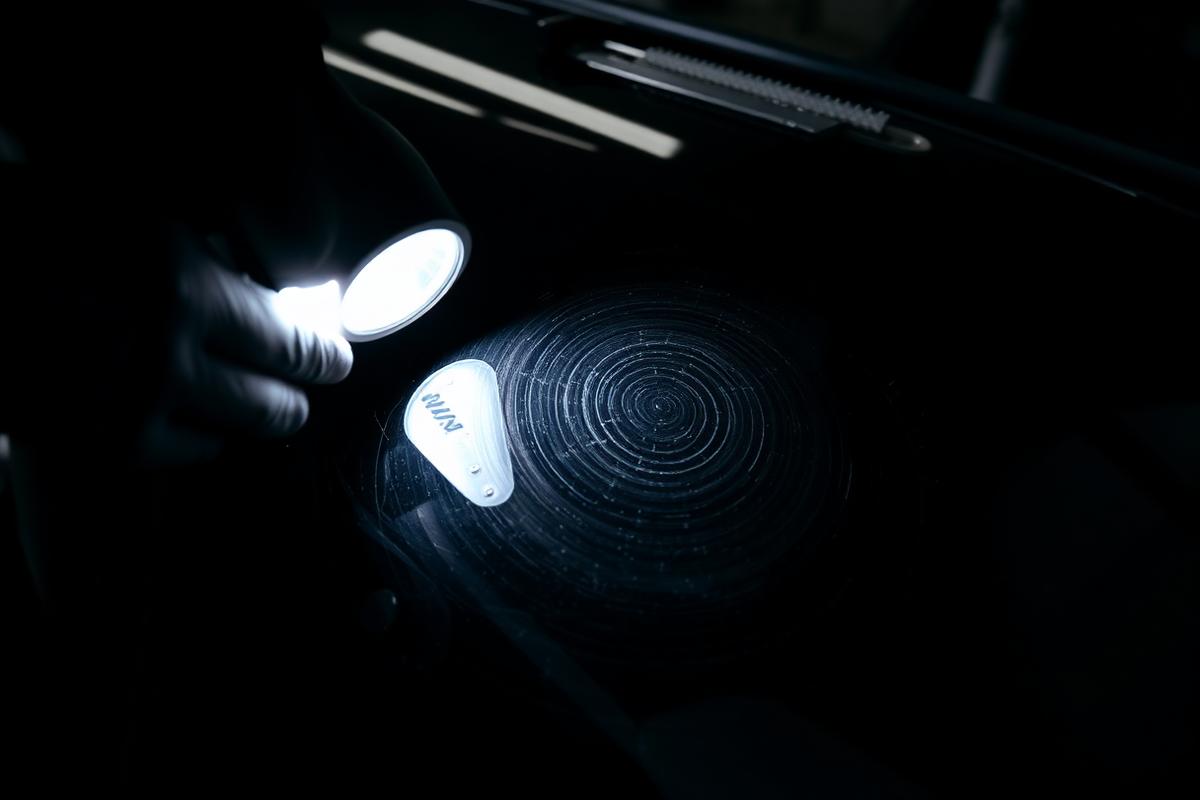
There is a hard ceiling on any polishing job: you can only remove clear coat that is there. When a scratch has reached the base coat, leveling the surrounding clear far enough to erase it would leave the panel dangerously thin. In those cases the honest answer is improvement rather than removal — the defect is softened, the edges are rounded off and it stops catching your eye, but it is still technically present. Deeper individual damage is covered on our scratch removal page.
The objective of a good correction is therefore not "remove every defect". It is the best reasonable improvement while preserving the long-term integrity of the paint. A finish that looks 90% better and still has years of clear coat left is a better result than one chasing the last isolated scratch at the cost of the panel's remaining life.
Why Charlotte vehicles develop paint defects
None of the conditions below are unique to Charlotte, but the combination here is unusually hard on clear coat. Spring brings weeks of heavy oak and pine pollen that settles into a gritty film; if it is wiped off dry, those grains act like fine sandpaper and install swirl marks in a single pass. Our pollen and paint guide covers that cycle in detail.
Mature tree cover across older neighborhoods adds sap and bird droppings, both of which are acidic enough to etch a ring into clear coat within days when they bake in summer heat. Long, hot, high-UV afternoons in uncovered office and apartment lots accelerate oxidation and make every residue harder to remove — see the Carolina summer UV care guide.
Then there is water. Afternoon thunderstorms leave dust-laden droplets that dry on hot panels, and irrigation overspray in subdivisions puts mineral-heavy water directly onto paint. Both leave the mineral deposits that turn into etched water spots. Add repeated automatic brush washes, well-intentioned but abrasive hand washing, and drying with a towel that has picked up grit, and you have the standard defect profile we see on Charlotte daily drivers.
On top of that, bonded contamination that a wash will not lift has to come off before any polishing begins — that is paint decontamination, and skipping it means dragging embedded particles across the panel with the pad.
Dark vehicles show all of this most clearly. Black, dark grey and navy paint reflects light with high contrast, so every fine scratch scatters visibly. The same defect load on silver or white paint often goes unnoticed until the car is polished next to itself.
Levels of correction: gloss enhancement to multi-step
"Paint correction" describes a range, not a single service. The right level depends on how much defect is present and how much of it is worth chasing.
| Approach | General expectation | Best for |
|---|---|---|
| Gloss enhancement | Improves clarity and gloss; little measurable leveling | Healthy paint where the goal is depth rather than defect removal |
| One-step correction | A large share of light swirling in a single polishing stage | Daily drivers wanting a big visual improvement for reasonable cost |
| Two-step correction | A more aggressive cutting stage, then refinement | Dark paint, older vehicles, pre-coating preparation |
| Multi-step / advanced | Highest safe improvement, assessed panel by panel | Enthusiast finishes and heavily neglected paint |
Why we avoid promising percentages
Any range described above is a general expectation only, never a guarantee. What a specific vehicle will do depends on defect depth, paint hardness, clear-coat condition, how much previous polishing it has had, whether any panels have been repainted, vehicle age, the paint material actually left to work with, and what the owner wants from the result.
Two identical models, same color, same year, can respond very differently — one because it was washed at a tunnel weekly, the other because a previous detailer already took a pass at it. That is why we describe the plan after seeing the paint rather than selling a stage count over the phone.
Diminishing returns are also real: the last stubborn ten percent of defects can take as long as the first large improvement and removes more clear coat. For most daily drivers, one- or two-step work is the sensible stopping point.
How we decide how far to correct
Reaching straight for the heaviest compound and hardest pad is the fast way to a result and the fast way to a problem. Every polishing pass permanently removes a microscopic amount of clear coat, and clear coat does not grow back. It is thinnest exactly where enthusiasm does the most damage: edges, body lines, panel crowns and around badges.
So the working principle is clear-coat preservation. The best correction is not the most aggressive correction — it is the maximum reasonable improvement achieved with the minimum necessary material removal, leaving enough clear coat that the paint can be safely polished again years from now if it needs to be.
- 1Inspect the vehicle after a safe wash and decontamination, under focused lighting, panel by panel
- 2Identify what the defects actually are — swirls, holograms, etching, oxidation, isolated scratches, or refinish marks
- 3Separate what is realistically correctable from what is too deep to level safely
- 4Assess the overall condition of the finish, including repainted panels, thin edges and previous polishing
- 5Run a test spot on a representative panel
- 6Choose the least aggressive pad and polish combination that achieves the desired improvement
- 7Adjust the plan as work progresses, based on how the paint is responding
What a test spot tells us
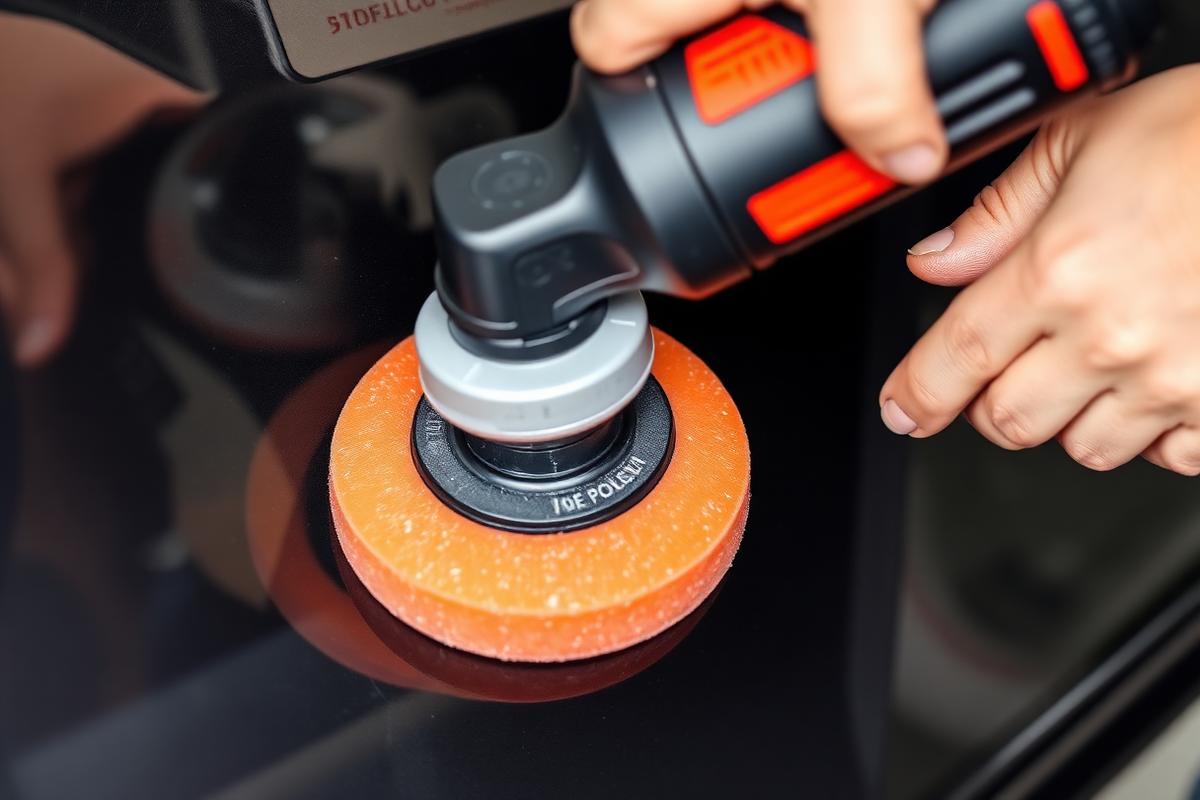
A test spot is a small, representative area corrected first, before anything else on the car is touched. It exists because paint systems behave very differently even when they look identical.
Hard clear coat resists cutting: it takes more passes, a firmer pad or a stronger polish to level the same defect, but it usually finishes down cleanly. Soft clear cuts quickly but marks easily, so a combination that works beautifully on a German sedan can leave micro-marring or a faint haze on a softer Japanese finish.
The test area answers the practical questions in a few minutes: how fast the defects are coming out, whether the polish is finishing clear or leaving haze, whether the pad is grabbing or marring, and whether a refinement stage will be needed. Once one area is right, the rest of the vehicle gets a process that is already proven on that paint instead of one being figured out on the customer's hood.
Dark paint and black vehicles
Black and dark paint is the honest test of correction work. Fine swirls read as visible circular scratches in direct sun, holograms show as shimmering straight bands the moment the light angle changes, and any haze left by a compound that was not properly refined is obvious rather than hidden.
That visibility cuts both ways. Because defects show so clearly beforehand, dark vehicles often produce the most dramatic difference after correction — the reflections go from cloudy and broken to sharp. It also means the finishing stage matters more: a dark car needs the refinement pass to be genuinely finished, not merely started.
Afterward, washing discipline matters most on dark paint too, because it will be the first place any new marring shows. Our guide to washing a car without scratching it is the practical follow-up.
Paint correction before ceramic coating
A coating protects a surface; it does not repair one. Whatever condition the clear coat is in on installation day is the condition that gets sealed under a durable layer for years — and because a coating adds gloss and clarity, existing defects often become easier to see rather than harder.
That is why coating does not replace correction. If a vehicle shows swirl marks, haze, water-spot etching, oxidation or other visible defects, those should be evaluated before any coating goes on. Coating over them locks them in, and removing them later means polishing the coating off first.
Correcting first also gives the coating the surface it was designed for: clean, level, decontaminated paint bonds better and looks considerably better under a coating than tired paint does. For many owners the sensible sequence is decontamination, the appropriate level of correction, then ceramic coating in Charlotte to hold that result. For others, the paint is already in good shape and only light polishing is needed before coating — that call comes from looking at the vehicle.
Planning a coating? Tell us the vehicle, its color and what the paint looks like in sunlight, and we'll tell you honestly how much correction it needs first. Call (980) 441-5881 or request a quote.
Paint correction vs polishing
The two terms get used interchangeably, which causes most of the confusion in quotes. Practically speaking, "polishing" often means a single light stage aimed at gloss and clarity — a cosmetic improvement on paint that is already reasonably healthy. Paint correction means polishing performed with the specific intention of removing defects, with the pad, polish and number of stages chosen to match what is actually in the clear coat.
Every correction involves polishing; not every polish is a correction. A gloss-enhancement polish on a swirled black car will look better for a while and still be swirled. Our paint correction vs polishing guide breaks the terminology down further.
Paint correction vs scratch removal
Correction treats the finish as a whole: broad, repeated surface defects spread across every panel. An individual deep scratch is a different problem and gets evaluated on its own, because one scratch can be deeper than everything else on the car combined.
The fingernail check is a rough guide, not a diagnostic test: if a nail drawn gently across the scratch catches in it, the damage has likely reached or passed through the clear coat and cannot be safely polished away. If the nail glides over it, there is a reasonable chance it can be leveled. It is imprecise — paint thickness and scratch profile vary — so treat it as a first hint rather than an answer. See scratch removal for how isolated damage is handled.
What paint correction does not fix
Polishing cannot restore paint that is no longer there, and on failing clear coat it can accelerate the failure. The conditions below are body and refinish work rather than detailing work. When we see them we say so — a body or paint shop is the correct next step, and correction or coating should wait until after that.
- Missing paint, or scratches that have gone through the clear into base coat or primer
- Rock chips on hoods, bumpers and mirrors
- Dents, creases and body damage
- Cracked, crazed or peeling clear coat
- Failing or delaminating paint on sun-baked roofs and hoods
- Rust and corrosion
- Severe paint failure where the finish has broken down completely
Newer vehicles can need correction too
A new car is not automatically a defect-free car. Vehicles are washed and dried at the factory, on transport, on the lot and at delivery prep, frequently with shared media and under time pressure. Dealer lot washing and improper drying are two of the most common sources of light swirling we see, and some vehicles arrive with a dealer-applied glaze that is hiding marks rather than removing them.
Previous detailing matters too. A car sold at two years old may have already had one aggressive polish, which affects how much clear coat is available now.
That is why many owners have a new or nearly-new vehicle lightly polished before a coating: not because the paint is bad, but because a small amount of correction removes the delivery marks so the coating seals a genuinely clean finish. Plenty of new vehicles need very little — this is a reason to inspect, not an assumption that every new car needs work.
Vehicle type, paint condition and goals
Paint condition and owner goals drive the process far more than vehicle category does. A ten-year-old daily driver washed carefully can need less work than a two-year-old SUV washed at tunnels.
That said, some patterns repeat. Daily drivers usually get the best value from a single-stage improvement plus protection. Luxury vehicles and enthusiast cars are more often candidates for multi-stage refinement because the owner is judging reflections closely. SUVs and trucks add surface area, height and large flat panels that show marring, which affects time more than technique. Older vehicles may have thin, previously polished or repainted panels that call for a conservative approach; newer ones often need light work only.
The result of any inspection is the same question in every case: what is in this paint, how much of it can come out safely, and what does the owner actually want the finish to look like?
What happens after correction
Freshly polished paint is bare. The old wax, sealant or coating came off with the defects, so protection is not an upsell here — it is the step that keeps the work you just paid for from being exposed.
- Paint sealant — practical months-long protection without the cost or commitment of a coating; a sensible default after a one-step
- Ceramic coating — years of durable protection over properly prepared paint, and the strongest match for a full correction
- Maintenance detailing — scheduled safe washing and top-ups that keep a corrected finish looking corrected
Keeping swirl marks from coming back
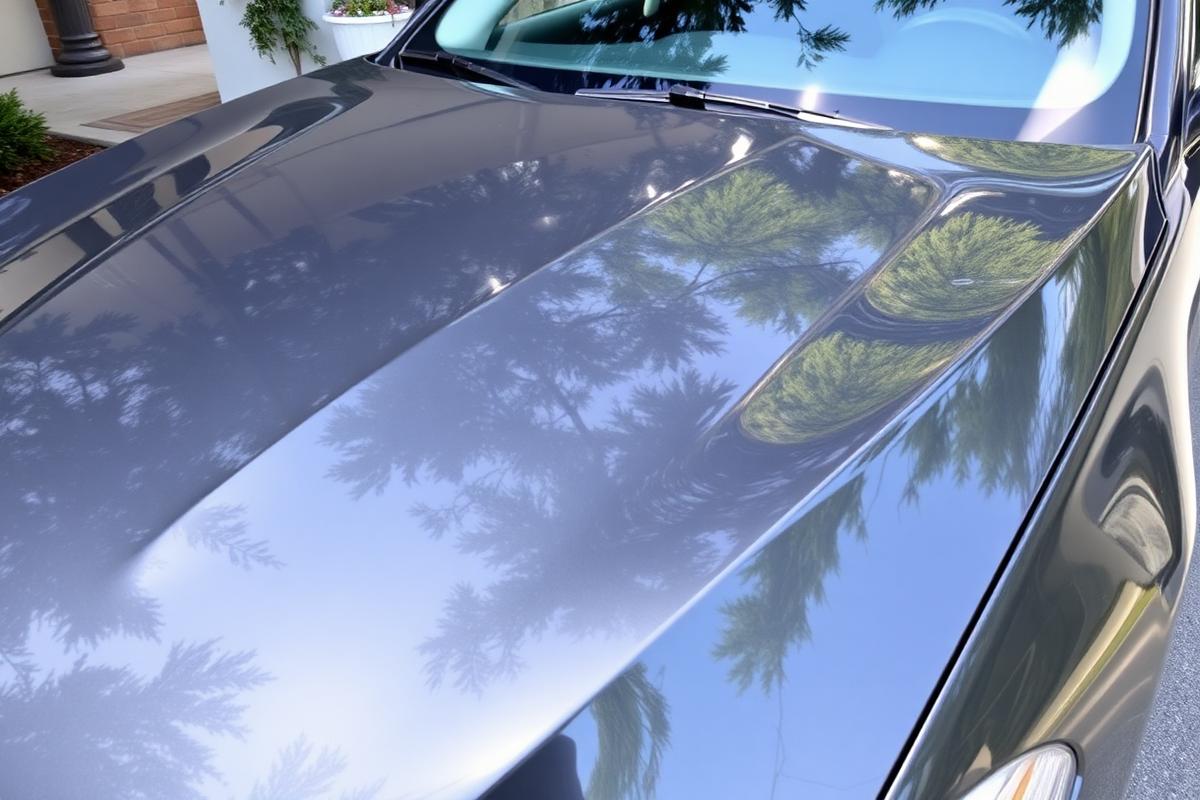
Correction removes existing defects. It does not make paint harder, and it does not protect the finish from the process that created the swirls in the first place. Most re-swirled cars we see were re-swirled by washing, not by the environment.
- Avoid brush and cloth automatic tunnels entirely — they are the single fastest way to reinstall swirl marks
- Wash with clean media and plenty of lubrication, using separate wash and rinse buckets
- Never dry-wipe pollen, dust or bird droppings off a dry panel
- Dry with clean, soft towels, and retire any towel that has hit the ground
- Keep contamination off the paint: rinse regularly during pollen season and remove sap and droppings promptly
- Decontaminate periodically rather than polishing to remove bonded grit — see clay bar treatment
- Keep protection topped up so contamination sits on the sealant or coating rather than the clear coat
Prefer not to manage the washing yourself? Ask about scheduled maintenance detailing for the corrected finish. Call (980) 441-5881 or request a quote.
Does your vehicle actually need paint correction?
- You may need correction if: the paint looks dramatically better wet than dry
- Circular swirl patterns appear when sunlight hits the hood or trunk
- The finish looks hazy or cloudy under parking-lot and gas-station lighting
- Previous machine polishing left straight, shimmering hologram trails
- Water spot rings stay behind after the car is washed and dried
- You are preparing visibly imperfect paint for a ceramic coating
- You may not need significant correction if: the paint is already clear and largely defect-free
- The vehicle mainly needs contamination removed rather than defects leveled — that is decontamination
- Your goal is to protect a good finish rather than restore a tired one
- The remaining defects are too deep to polish away safely
Describe the vehicle and its paint condition and we'll help determine whether correction, polishing, decontamination or another service makes more sense. Call (980) 441-5881 or request a quote.
Mobile paint correction across the Charlotte area
This is a mobile service. Correction is performed at your home, workplace or another suitable parking location, which means shade, dry conditions and enough room to work around the vehicle matter more than any address does. We schedule polishing work to avoid direct midday summer sun and reschedule for rain.
We serve Charlotte and the surrounding metro — see areas we serve for the locations covered. Correction can be booked on its own or combined with exterior detailing so the vehicle is fully prepared before polishing begins.
Related exterior work
- Swirl mark removal — the most common single reason people book correction
- Oxidized paint restoration — chalky, faded single-stage and sun-damaged finishes
- Water spot removal — mineral etching from sprinklers and rain drying on hot panels
- Scratch removal — isolated deeper damage evaluated on its own
- Paint decontamination — the required first step before any polishing
- Paint correction vs polishing — terminology explained
Frequently asked questions
What is paint correction?
Paint correction is machine polishing that removes a microscopically thin layer of clear coat to level defects such as swirl marks, haze and light scratches. Because the surface becomes level again, light reflects cleanly and the paint looks deeper and glossier — nothing is added or filled.
How much does paint correction improve a vehicle?
It depends on what is in the paint. Lightly swirled daily drivers usually see a large, obvious improvement from a single polishing stage, while heavily neglected or dark paint may need two or more stages. We assess the finish and run a test spot rather than promise a percentage.
Can paint correction remove scratches?
Light scratches that sit within the clear coat can usually be leveled. Anything deep enough for a fingernail to catch has likely reached the base coat and can normally only be improved and made less noticeable, not erased. Isolated deeper damage is covered on our scratch removal page.
Can paint correction remove swirl marks?
Yes — swirl marks are the defect correction handles best, because they are shallow scratches in the clear coat from washing and drying. Most light to moderate swirling responds well to one- or two-stage polishing.
Can paint correction remove water spots?
Fresh mineral deposits wash or dissolve off. Once minerals have etched a ring into the clear coat, polishing is the removal method, and success depends on how deep the etching went. Long-baked etching on hot panels is sometimes only improved.
Can paint correction fix oxidation?
Often, yes. Oxidized paint has a chalky, faded surface layer that polishing can cut back to reveal healthy paint underneath, which is very effective on single-stage finishes. Where clear coat is already failing or peeling, polishing is not the answer and refinishing is.
Does paint correction remove clear coat?
Yes, a microscopic amount — that is how it works. Clear coat does not grow back, which is why we use the least aggressive pad and polish combination that achieves the result and work carefully around edges and body lines.
Is paint correction safe?
It is safe when performed conservatively, with a test spot first, controlled passes and care at thin areas such as edges and panel crowns. It becomes risky when the most aggressive combination is used by default or when the same panel is polished hard repeatedly over the years.
How long does paint correction take?
A single-stage correction on a mid-size vehicle is generally a full day. Two-stage work is usually one to two days, and multi-stage work longer. Correction is not something that can be squeezed into an afternoon alongside a full detail.
Does a new car need paint correction?
Not always, but new does not mean flawless. Transport, lot washing, delivery prep and improper drying can leave light swirls or haze on a car with almost no miles. Many owners have a new vehicle lightly polished before a coating so the coating seals a clean finish.
Should paint correction be done before ceramic coating?
If the paint shows visible defects, yes. A coating protects the surface it is applied to and seals in whatever condition that surface is in, so swirls, haze and etching should be addressed first. Paint that is already in good shape may only need decontamination and a light polish.
How do I keep swirl marks from returning?
Avoid brush automatic washes, use clean wash media with plenty of lubrication, never dry-wipe pollen or dust off dry paint, dry with clean soft towels, remove sap and droppings promptly, and keep protection topped up. Scheduled maintenance detailing is the easiest way to keep a corrected finish stable.
Related pages
Swirl Mark Removal in Charlotte
Those spider-web circles that appear under sunlight and gas station lights are thousands of shallow scratches. They can be removed properly — and prevented from returning.
Read moreCar Scratch Removal in Charlotte
Whether a scratch can be removed comes down to one question: how deep does it go? We assess before promising anything.
Read moreCeramic Coating in Charlotte
A durable, semi-permanent layer that bonds to properly prepared clear coat, making the surface slicker, glossier and easier to keep clean through Carolina pollen, heat and rain.
Read morePaint Correction vs Polishing
The words get used interchangeably in advertising. They describe different levels of work with different outcomes and different risks.
Read moreBook mobile detailing in Charlotte
Tell us the vehicle, its condition and where it will be parked. We'll confirm what the vehicle actually needs and what it will cost before any work starts.